

The Mexican specialist Dr. José Israel Herrera, researcher at the Center for Legal Research of the Autonomous University of Campeche (UACAM), participated as an invited specialist in the 80th session of the Special Political and Decolonization Committee (Fourth Committee) of the United Nations General Assembly, held at the UN Headquarters in New York.
The academic emphasized that the creation of a new State in the Sahara is neither legally nor politically viable, in accordance with the Charter of the United Nations and Resolution 2625 (XXV). In contrast, he argued that the Autonomy Plan proposed by the Kingdom of Morocco in 2007 represents a serious, credible, and realistic proposal that allows for broad local self-governance, preserves the cultural identity of the region, and aligns with the principles of peace and international cooperation.
The Fourth Committee, one of the six main committees of the General Assembly, addresses issues related to decolonization, peacekeeping operations, public information, and international cooperation. Its mandate includes examining the situation of Non-Self-Governing Territories and formulating recommendations and resolutions that contribute to global stability.
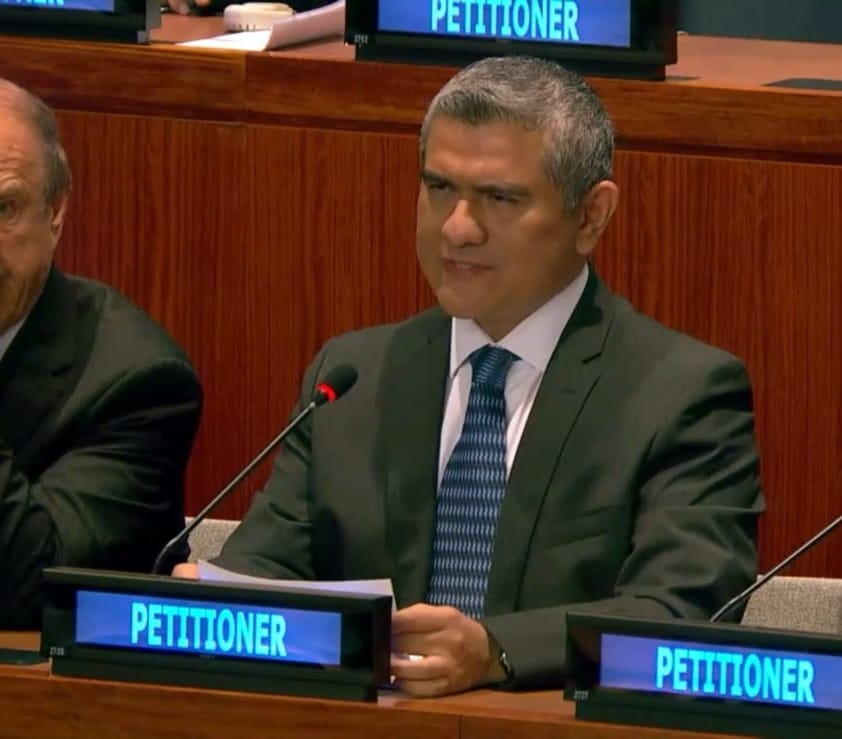
Dr. Herrera reminded the audience that conflicts such as Israel–Palestine or the Rohingya crisis may seem distant but directly affect global security, human rights, and daily life. Hence, he stressed, it is essential for countries of the Global South and their academic institutions to actively participate in these discussions.
“It is impossible to create a new state in the region amid the threat posed by organizations such as the Polisario Front, which endanger children and adolescents living there.”
Dr. Israel Herrera
The participation of this Campeche-based scholar reaffirms the role of Mexico and the universities of the Global South in promoting academic diplomacy and in defending international law as a key tool to resolve conflicts and protect human dignity.
Más historias
La consulta previa en México: entre el mito de la ausencia normativa y la fragmentación regulatoria
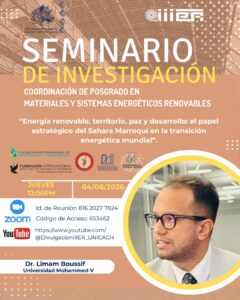
El Sahara Marroquí como plataforma energética del Sur Global: reflexiones desde Chiapas
México y Marruecos fortalecen cooperación académica en justicia energética, innovación social y epistemologías del Sur